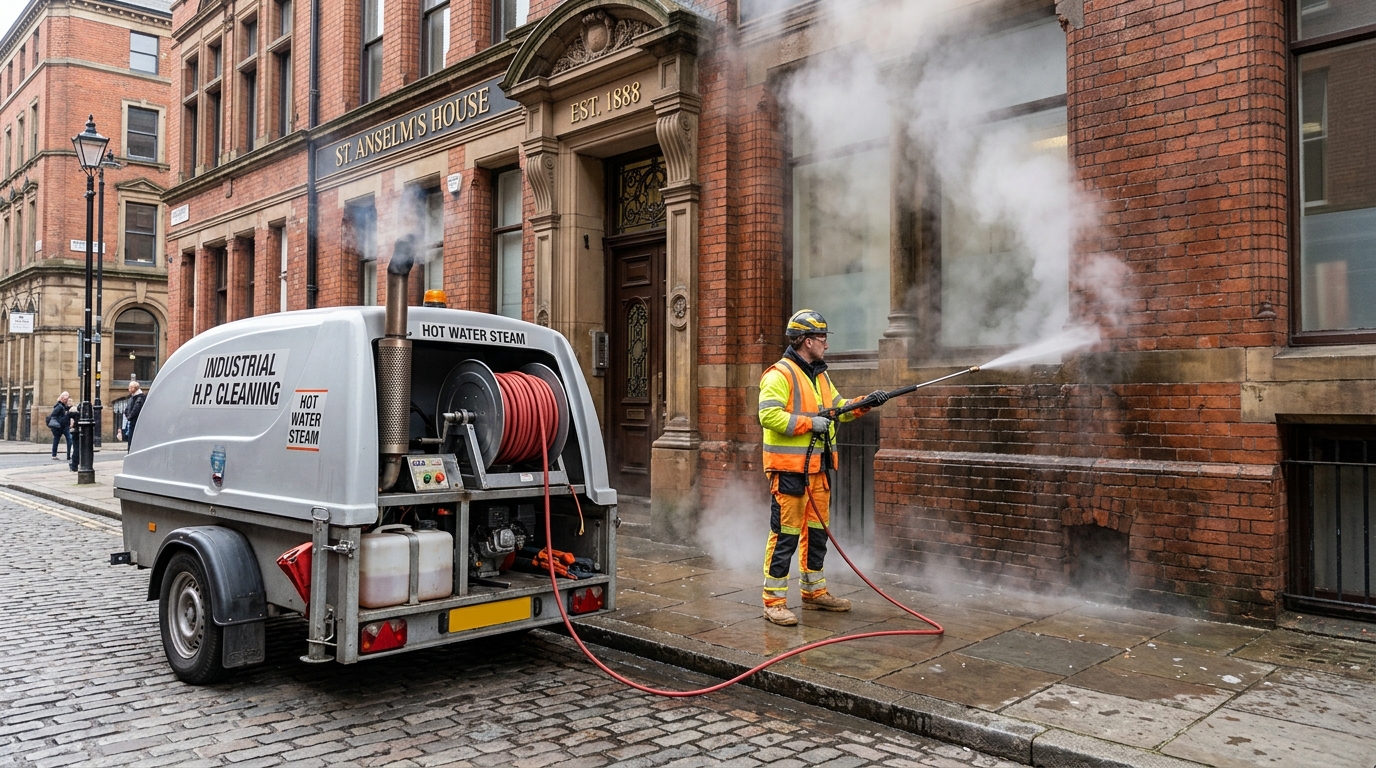
High-Pressure Steam Trailers, The Hidden Inspection Mandate & TCO
When procuring high-pressure hot water and steam trailers, sales representatives rarely disclose that periodic recertification of a PED Category IV machine is legally mandatory across Europe. Understand the legal frameworks, the 2-litre threshold, and the true Total Cost of Ownership.
What Dealers Rarely Disclose When Selling High-Pressure Trailers
When procuring a professional high-pressure hot water or steam trailer (for facade maintenance, chewing gum abatement, weed control, or industrial surface cleaning), sales conversations invariably center on working pressure (up to 500 bar), engine power, and cleaning throughput.
What dealerships almost never disclose: If the internal fluid volume of the burner/heat exchanger exceeds 2 litres at > 110 °C, that high-pressure trailer legally represents a mobile steam boiler under PED Category IV. Consequently, the buyer is legally obligated to contract an accredited body for a formal on-site commissioning audit, undergo periodic recertifications, and respect strict OEM spare parts lock-in.
Conversely, high-pressure trailers designed with a burner/heat exchanger strictly ≤ 2 litres qualify under Sound Engineering Practice (Art. 4.3 SEP), completely exempting the owner from mandatory pre-commissioning examinations, periodic audits, and OEM vendor lock-in.
* This recertification interval may differ per country (e.g. in the Netherlands 24 months under WBDA, in Belgium an annual recertification is required under the Codex, in Germany 1–3 years under BetrSichV, and in specific circumstances manufacturers or inspection bodies may stipulate differing intervals).
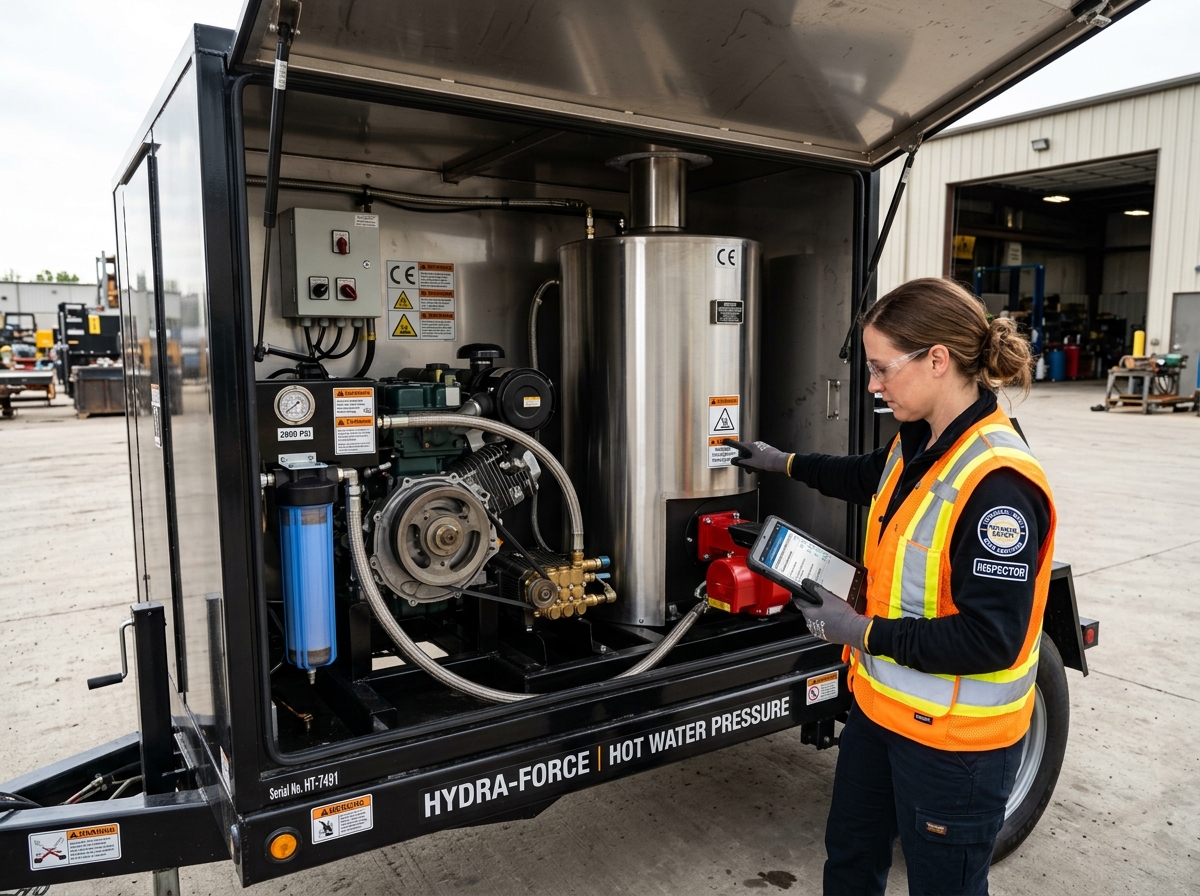
Labour Inspectorates Enforce In-Service Rules
A CE mark covers only factory manufacturing. Once operational on European job sites, the employer bears strict liability for valid pre-commissioning certificates and biennial recertifications.
The 3 Critical Questions for Every Buyer
Demand clear answers to these three legal and technical criteria before executing a purchase agreement for any high-pressure steam trailer:
Pre-Commissioning Inspection
Is the proposed machine legally mandated to undergo formal on-site commissioning inspection by an accredited body before its first operational deployment?
Recurrent Statutory Audits
Does the equipment remain exempt from recurrent inspections, or does it trigger mandatory 12–24 month reinspections (€ 1,000–€ 2,500) plus recurring operational downtime?
Component Freedom & OEM Lock-in
Are you permitted to use certified universal replacement parts, or does non-OEM hose/nozzle replacement legally invalidate the assembly certification and insurance cover?
The Commercial Silence: What High-Pressure Trailer Dealers Fail to Disclose
During sales negotiations for hot water and steam trailers, prospective buyers are bombarded with pump pressures, diesel engine kilowatts, and cleaning speed. The legal operational burden of operating a PED Category IV machine is almost never proactively disclosed.
“The high-pressure trailer carries an official CE mark, complies with all standards, and is ready to work on day one.”
A factory CE mark covers only manufacturing. If the burner/heat exchanger volume exceeds 2 litres at > 110 °C, operating without a prior on-site Pre-Commissioning inspection by an accredited body (NL-CBI / EDTC / TÜV) constitutes a statutory offence.
“Standard annual engine oil and pump maintenance at our dealership is all that you will need.”
Category IV high-pressure steam trailers are legally subject to mandatory periodic recertification (every 24 months)*. This requires hydrostatic pressure testing (up to 1.43x design pressure) and safety relief valve bench testing, costing € 1,000–€ 2,500 plus 2 days crew downtime.
“High-pressure hoses wear out naturally; you can replace them with any good hose from your local shop.”
In a certified Category IV assembly, using non-OEM hoses legally invalidates the entire assembly CE certificate. The high-pressure trailer becomes illegally operated, and commercial insurance will deny all liability claims in case of a burst injury.
High-pressure trailers utilizing compact continuous-flow burners/heat exchangers (≤ 2L) are 100% exempt from pre-commissioning examinations, periodic recertifications, and OEM parts vendor lock-in under Article 4(3) of Directive 2014/68/EU.
Sectors Exposed to High-Pressure Trailer Inspection Obligations
High-pressure trailers and mobile skid units are ubiquitous across cleaning, facility, and municipal operations. If these units produce steam (> 110 °C), they fall under strict pressure equipment scrutiny:
Facade & Surface Cleaning
Removal of atmospheric soiling, algae, and grime from commercial properties, historical brickwork, and bridges using hot water (200–350 bar).
Chewing Gum & Street Washing
Municipal contractors clearing chewing gum and grease from pedestrian pavements, transit hubs, and town centres using high-temperature steam.
Thermal Weed Abatement
Ecological weed control on paved surfaces utilizing boiling water (> 100 °C) and saturated steam without chemical herbicides.
Graffiti & Industrial Hydro-Cleaning
Paint stripping, tank cleaning, and industrial heavy degreasing at extreme operational pressures reaching up to 500 bar.
How to Inspect Your High-Pressure Trailer’s Nameplate in 30 Seconds
CE Mark + 4-Digit NoBo Number
If the high-pressure trailer data plate displays “CE 0036” (TÜV), “CE 0029” (Apragaz), or “CE 0620” (Kiwa), the complete high-pressure trailer is certified as a Category IV assembly. You MUST possess a valid on-site commissioning report and arrange periodic recertifications.
Generic CE Alone (> 2L Coil)
If the high-pressure trailer has a burner/heat exchanger volume > 2 litres at > 110 °C but only displays a generic CE mark with no 4-digit number, the manufacturer has failed to certify the complete assembly under PED. Operating this high-pressure trailer constitutes an immediate breach of European law.
Burner/Heat Exchanger Volume ≤ 2L (SEP)
If the manufacturer documentation confirms the burner/heat exchanger holds strictly 2 litres or less, the machine qualifies under Sound Engineering Practice. No NoBo number is affixed under PED because it is 100% exempt from commissioning and periodic audits!
The Two Worlds of High-Pressure Steam Trailers
Why physical burner/heat exchanger volume determines whether your high-pressure trailer operates freely across Europe or subjects your business to continuous inspection costs, team downtime, and strict OEM spare parts lock-in.
High-Hazard Mobile Steam Boiler
Fired coil holding 3 to 15+ litres of water under high pressure and steam temperature (> 110 °C). Extreme accumulated thermal energy creates critical explosion hazard.
Inherently Safe Continuous-Flow Unit
Compact mono-tube burner/heat exchanger coil holding ≤ 2 litres. Minimal stored energy eliminates catastrophic steam explosion risk at the physical source.
Is Your High-Pressure Trailer Subject to Mandatory Statutory Audits?
Answer 3 straightforward technical questions regarding the operating parameters of your mobile steam trailer or skid to establish its exact legal status under European regulations.
What are the design pressure (PS) and operating temperature (TS) of your equipment?
Under European Directive 2014/68/EU (Annex II Table 5 for steam and superheated water generators), the stringent boiler regime applies once pressure and temperature exceed 31.25 bar and 110 °C.
PS (e.g. 200 bar) and maximum design temperature TS (e.g. 150 °C).Essential Knowledge & Calculation Models
Immediate access to physical threshold physics, the interactive 10-year TCO calculator, and the full downloadable audit checklist.
Why 2 Litres Dictates the Legal Threshold
Compare System A (< 2L SEP) with System B (> 2L PED Category IV) regarding stored thermal energy and safety design.
TCO Inspection Cost Calculator
Simulate the real lifecycle financial impact of pre-commissioning, biennial audits, downtime, and OEM parts over 2 to 10 years.
Procurement & Audit Checklist PDF
Use the comprehensive 10-point audit checklist to verify compliance before purchasing and during statutory field audits.
Frequently Asked Questions about PED 2014/68/EU
Authoritative answers to common questions regarding classification, the 2-litre threshold, downtime, and employer liability.
The Pressure Equipment Directive (PED 2014/68/EU) harmonizes European legislation on the design, manufacture, and conformity assessment of pressure equipment and assemblies with a maximum allowable pressure greater than 0.5 bar. It applies to equipment placed on the European market, establishing safety categories from I to IV.
Under PED 2014/68/EU Annex II Table 5 (fired or heated pressure equipment for steam or superheated water > 110 °C and > 31.25 bar), equipment with a burner/heat exchanger volume up to 2 litres falls under Article 4(3) Sound Engineering Practice (SEP). Exceeding 2 litres automatically elevates the entire high-pressure trailer assembly into the highest hazard tier: Category IV.